Scene 1: A Ballroom in the Duke’s Palace (Mantua)
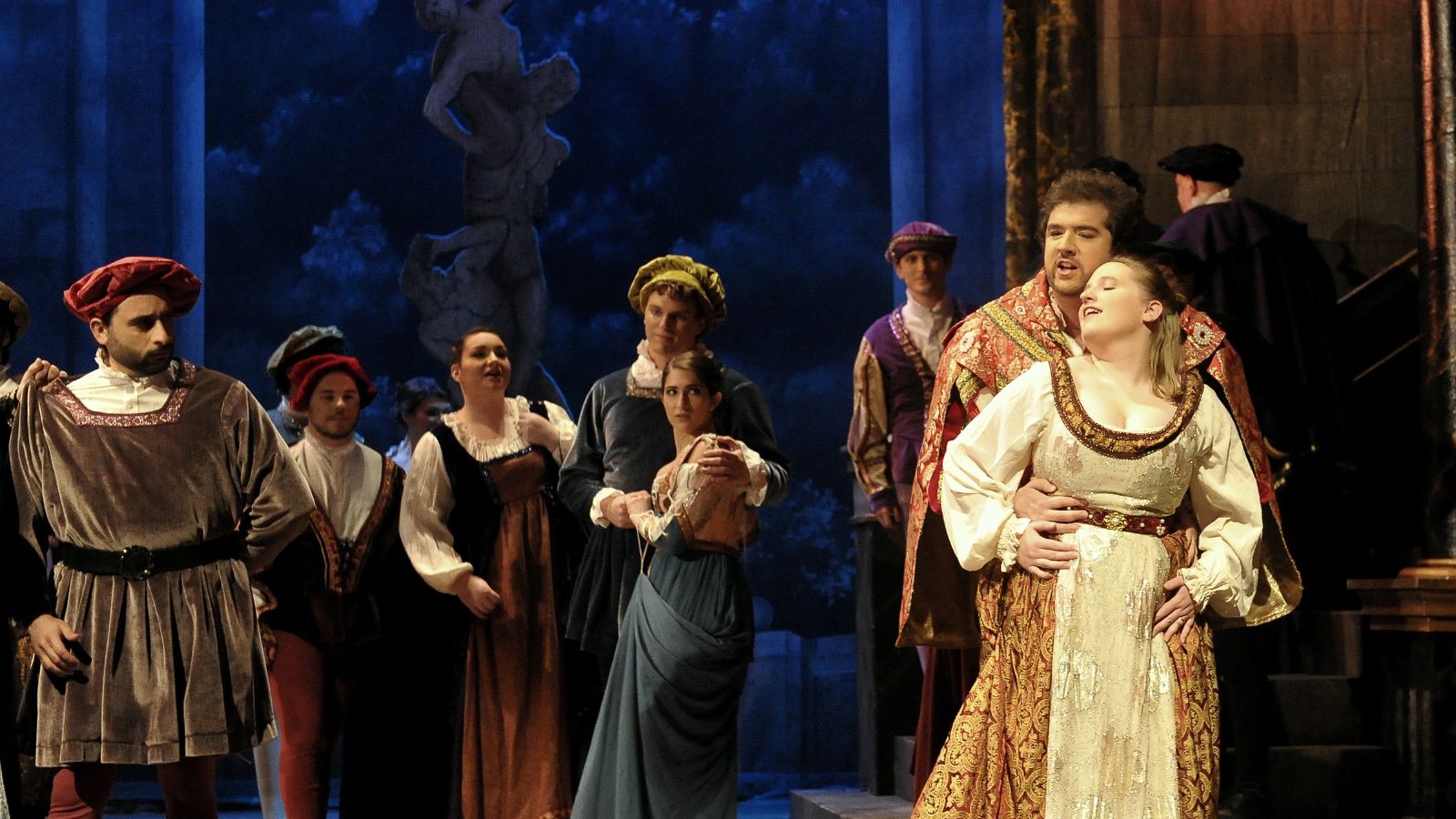
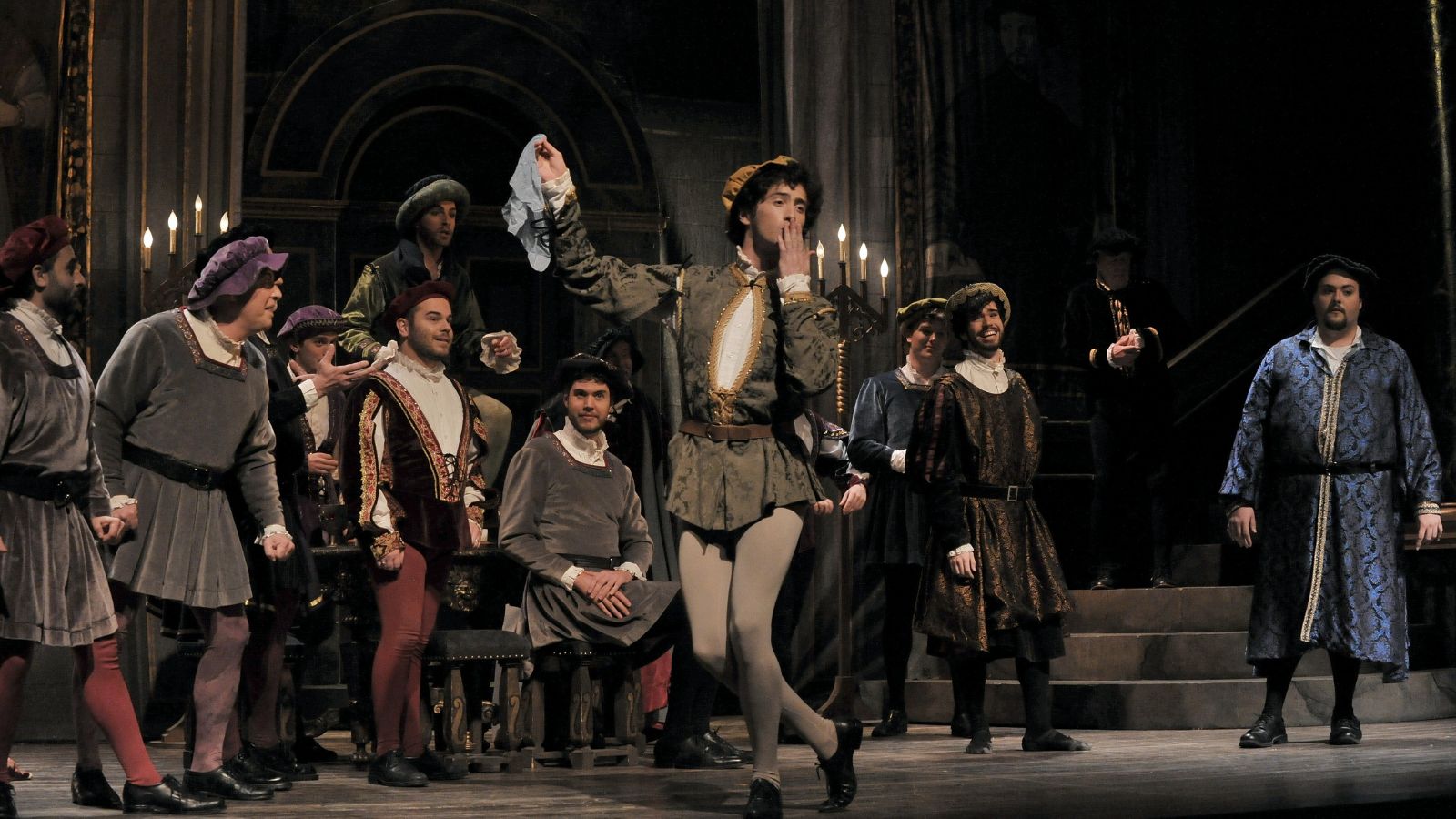
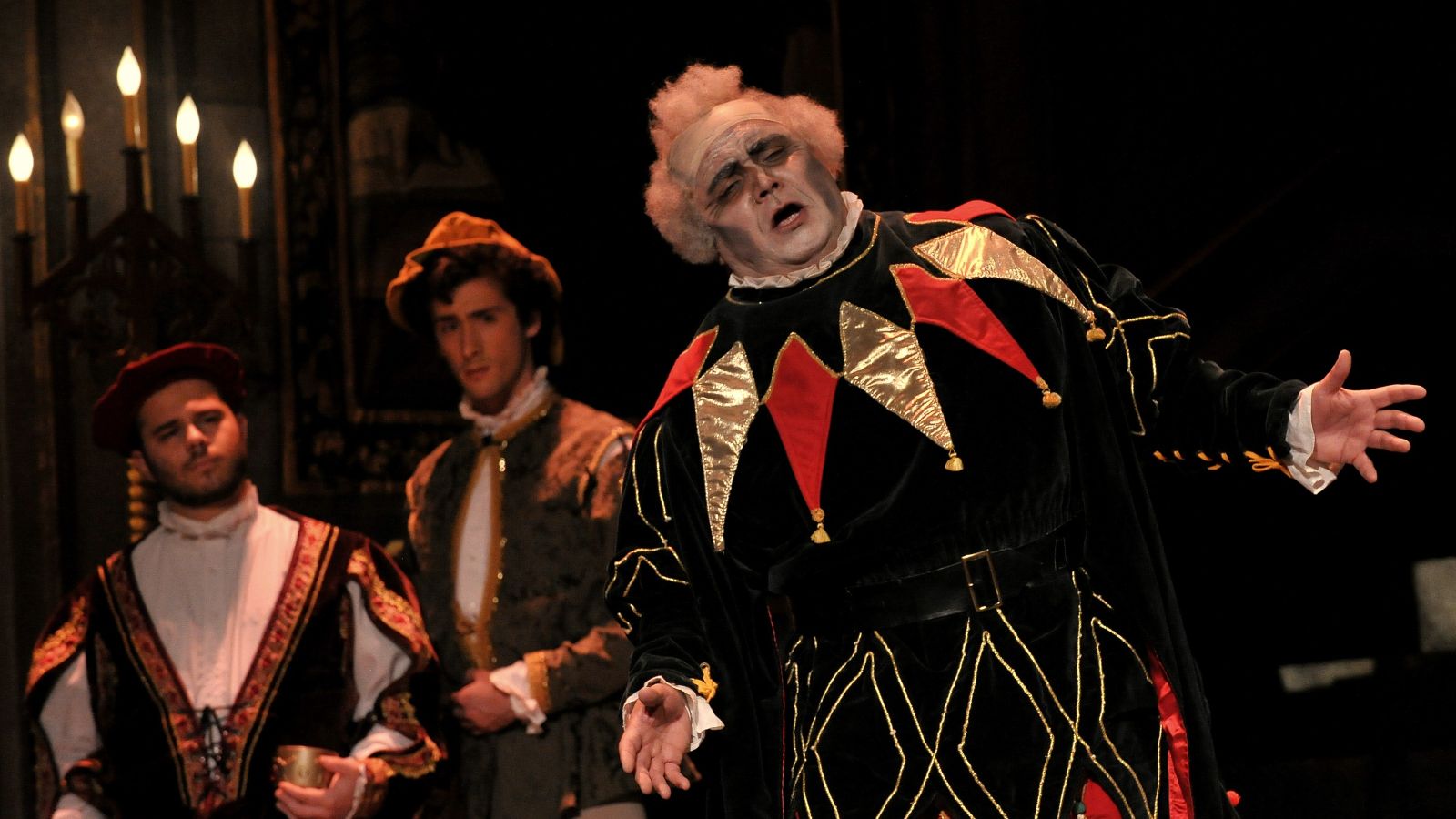
The Duke of Mantua boasts of his libertine lifestyle, particularly his pursuit of a mysterious young woman he has seen in church. He seduces the Countess Ceprano while Rigoletto, his hunchbacked court jester, mocks the cuckolded Count Ceprano. The courtiers, angered by Rigoletto’s cruelty, plot revenge.
Monterone, an old nobleman, enters and condemns the Duke for seducing his daughter. Rigoletto ridicules him, but Monterone furiously curses both the Duke and Rigoletto. Rigoletto is shaken by this curse.
Scene 2: A Dark Street Outside Rigoletto’s Home
Rigoletto broods over Monterone’s curse. The assassin Sparafucile offers his services, but Rigoletto declines.
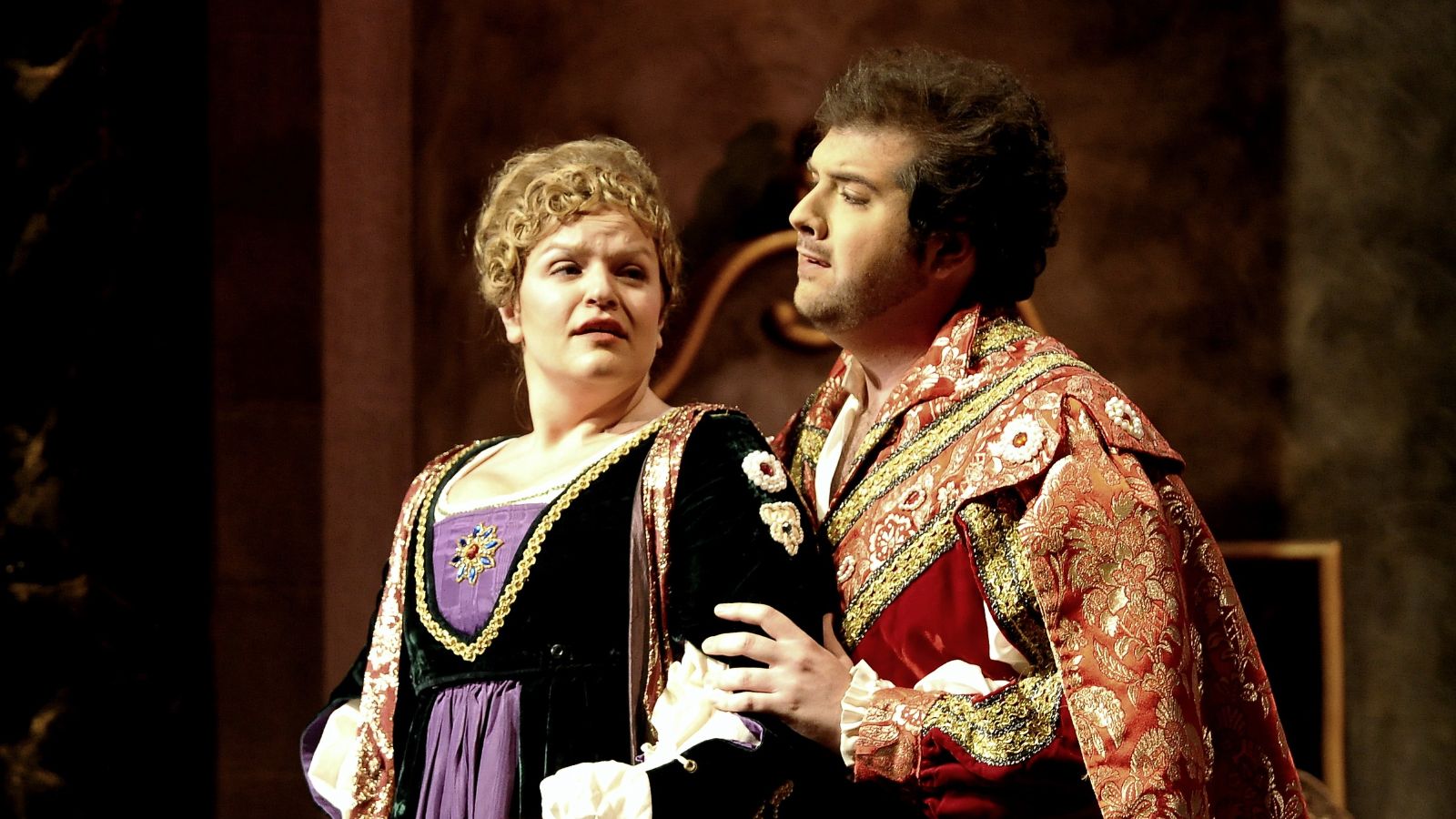
At home, Rigoletto lovingly greets his daughter, Gilda, whom he keeps hidden from the world. Gilda, unaware of her father’s profession, confesses she has seen a young man at church and secretly loves him. That man is the Duke, who now arrives in disguise and declares his love for her.
After he leaves, the courtiers trick Rigoletto into helping them abduct Gilda, whom he believes they are kidnapping from Count Ceprano’s house. Once he realizes his mistake, he is devastated.
The Duke’s Palace
The Duke is distraught when he discovers Gilda is missing, but soon rejoices when he learns the courtiers have brought her to him.
Rigoletto enters, feigning indifference, but when the courtiers confirm Gilda’s abduction, he pleads for her return. Gilda appears, ashamed, and confesses her love for the Duke. Rigoletto vows revenge on his master.
A Tavern by the River
Rigoletto brings Gilda to a tavern where Sparafucile’s sister, Maddalena, lures the Duke inside. Disguised as a soldier, the Duke sings his famous aria “La donna è mobile,” mocking women’s fickleness. Maddalena, however, falls for him and persuades Sparafucile to spare him. Instead, they agree to kill the next visitor and place his body in a sack.
Rigoletto orders Gilda to leave town but she secretly returns, sacrificing herself by entering the tavern in disguise. Sparafucile unknowingly kills her instead of the Duke.
Later, Rigoletto comes to claim the body, only to hear the Duke’s voice in the distance. He opens the sack and finds his dying daughter. As Gilda dies in his arms, Rigoletto realizes Monterone’s curse has come true.